

'Tis the season
Pima County’s wish list? … Better late than never … And we will give you one guess.
When we say it’s the beginning of the season, many of you will wonder how we’re going to tie Tucson politics to the holidays.
Did Santa come early with a new wave of pothole repairs for the Old Pueblo? Not quite.
It’s the start of legislative season. Even though the session doesn’t officially begin until January, lawmakers can start pre-filing bills in just a few days.
Pima County is easily the state’s second-largest metropolitan region, but coming in second is part of the problem at the Legislature — which is dominated by the political machine tied to Maricopa County’s various constituencies. It also doesn’t help that Pima County is a Democratic oasis in a Republican-controlled state.
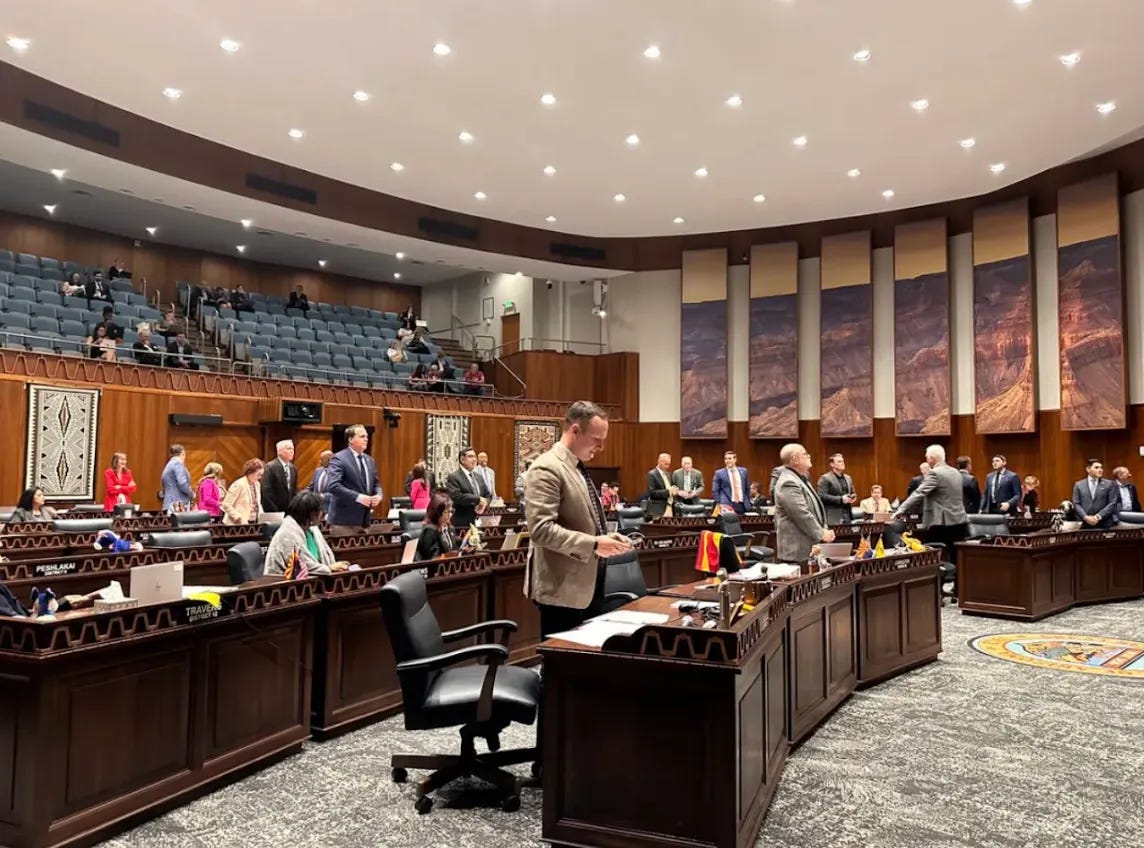
Earlier this year, the Pima County Board of Supervisors put forward its legislative agenda.1
So what are local officials asking state lawmakers for?
In short, more state funding.
For example, the county is again asking the state to consider increasing the gas tax — a request that’s been made several times before.
Roads are falling into disrepair because the need far outstrips available revenue. The base tax rate — tied to gasoline sales — hasn’t been adjusted in more than 30 years, nor has it evolved to capture revenue from alternative-fuel vehicles.
Since the memo doesn’t mention electric vehicles specifically, we’re left wondering how long that’s been on the county’s legislative wish list.
State services, county funds
The county is asking the state to step up funding for both courts and, by extension, adult probation. On paper, Arizona courts are a state function, but their operations — particularly the superior and justice courts — are administered and funded primarily at the county level.
Fines and fees you pay for a traffic ticket may go partly to the court, but the lion’s share comes from Pima County. It’s similar for probation, where monthly supervision fees cover only a fraction of the program’s true cost.
“Court costs and salaries of probation officers are one of the fastest growing expenses in the county budget,” Pima County Administrator Jan Lesher wrote back in July. “The county has very limited control over either one of these items, however, we bear significant financial responsibility for both. Legislative funding appropriations have failed to keep pace with the State’s responsibility to fund these programs.”
The county also wants the state to revisit the role of elected constables, noting that duties vary from county to county and questioning whether the position — which dates back to territorial days — is still efficient. It’s still ongoing, and now county officials want buy-in from lawmakers.2
“It is recommended that Pima County work with the County Supervisors Association to review the role and effectiveness of the constables and advance concepts to reform the position,” Lesher said.
While it’s unlikely to get a hearing — much less pass both chambers of the GOP-controlled Legislature — the county is still pushing for the establishment of “Severe Threat Orders of Protection,” better known as red flag laws or extreme risk orders of protection, aimed at reducing gun violence and preventing mass shootings.
This proposal has appeared on the county’s legislative agenda before, and if history’s any guide, it’s probably dead on arrival. Former Gov. Doug Ducey tried to get Republican lawmakers to pass a STOP order law in 2018 and failed.
More lawyers?
At least one county supervisor has publicly pushed for separate legal representation for the Pima County Board of Supervisors.
The argument is simple: If supervisors want to investigate the Sheriff’s Department, the Pima County Attorney’s Office — which represents both the sheriff and the board — faces an obvious conflict.
Last week, County Attorney Laura Conover addressed the issue on the Bill Buckmaster Show, saying it rarely comes up in Pima County.
“I’m (Sheriff Chris Nanos’) attorney, and I’m the legal advisor to the board. So all of that is natural. And all of that occurs statewide. Right. To the extent it occurs here, it occurs 15 times more in Maricopa (County),” Conover said.
She also poured cold water on the idea of legislation changing that setup.
“I know that the other 14 county attorneys are talking about this being well-settled law and, you know, unlikely to get any traction,” Conover said.
No cuts to preschool funding
The county also wants the state to continue funding preschool and childcare in the next fiscal year, warning that cuts could hurt its Pima Early Education Program Scholarships (PEEPs) program.
The state currently provides childcare subsidy reimbursements to providers serving low-income working parents and foster children, at rates meant to keep pace with the cost of quality care.
“The PEEPs program will be much less effective if statewide funding for preschool and childcare decreases dramatically next fiscal year,” Lesher wrote in the six-page memo.

Since its inception, the PEEPs program has relied on several funding sources to stay afloat — including American Rescue Plan Act funds. It has since shifted to a more sustainable model, relying primarily on the Pima County Library District tax levy. At least one partner, the City of Tucson, has publicly said it will no longer fund the program due to budget constraints.
While not directly tied to PEEPs, Pima County expects to raise the library district tax next year.
Bills start dropping next week, and we’ll be keeping an eye on which ones land on the county’s wish list.

Longest congresswoman-elect in history ends: Congress appears to have brokered a deal to end the shutdown (over the objections of all but a handful of Democrats), and that means Adelita Grijalva can finally take her seat. The swearing-in is set for today, around 2 p.m. Arizona time, per Politico, and will happen right before the House votes on the shutdown-ending budget bill.

It worked: The conservative Goldwater Institute went to bat for Grijalva in (what’s left of) the opinion pages of the Republic on Sunday. Timothy Sandefur, Goldwater’s vice president for legal affairs, argued the delay is unconstitutional and it’s House Speaker Mike Johnson’s duty to swear her in.
“No particular ceremony is required: Johnson need not even administer the oath himself. It could be done in five minutes by a notary public,” Sandefur wrote.
Free trains, expensive parking: The City of Tucson is considering increasing parking rates at city meters and extending the no-free-parking hours until 10 p.m. to help pay to keep the streetcar free, the Arizona Luminaria’s Carolina Cuellar reports.
This button helps us pay for parking at the next Tucson City Council meeting!
Keeping Bisbee weird: Among the many weird residents of the San Francisco of Southern Arizona (or Mayberry on acid, depending on which moniker you prefer) is Flaming Lips bassist Michael Ivins, per the Republic’s Ed Masley. Well, technically, he lives in Whetstone, just outside of Bisbee, where he and his wife Julie Keans have started a new band called The Lolly Bombs. They’re currently recording a debut album and gigging around rural Arizona.
“We don’t live in Bisbee. We live outside of it, literally in the middle of nowhere. But I think it suits us. We can play loud music.”

Today’s edition of the Tucson Agenda is sponsored by Education Forward AZ. To sponsor an edition of the Agenda, get in touch!
Education Forward AZ pushes for bold action on education attainment
Nearly 70% of Arizona jobs will soon require more than a high school diploma, yet the state isn’t producing enough adults with postsecondary education or training to meet that demand. Without a major increase in attainment, Arizona risks falling behind.
A new report from Education Forward Arizona spells out the gap. The Future of Attainment in Arizona tracks progress toward the Achieve60AZ goal of having 60% of adults hold a degree or credential by 2030, a benchmark set years ago by business, education, nonprofit, and policy leaders. Progress has slowed.
The report calls for stronger alignment between education and workforce systems and highlights early-stage initiatives with the potential to move the needle: career-connected learning, short-term and stackable credentials, and deeper employer partnerships to build a more resilient economy.
📚 Read the full report: The Future of Attainment in Arizona


We had to mute our Adelita Grijalva news alerts. But in doing so, we missed this nugget.
Grijalva was briefly mentioned in a CNN “Have I Got News for You” segment called “Two Truths and a Lie” about 10 days ago.
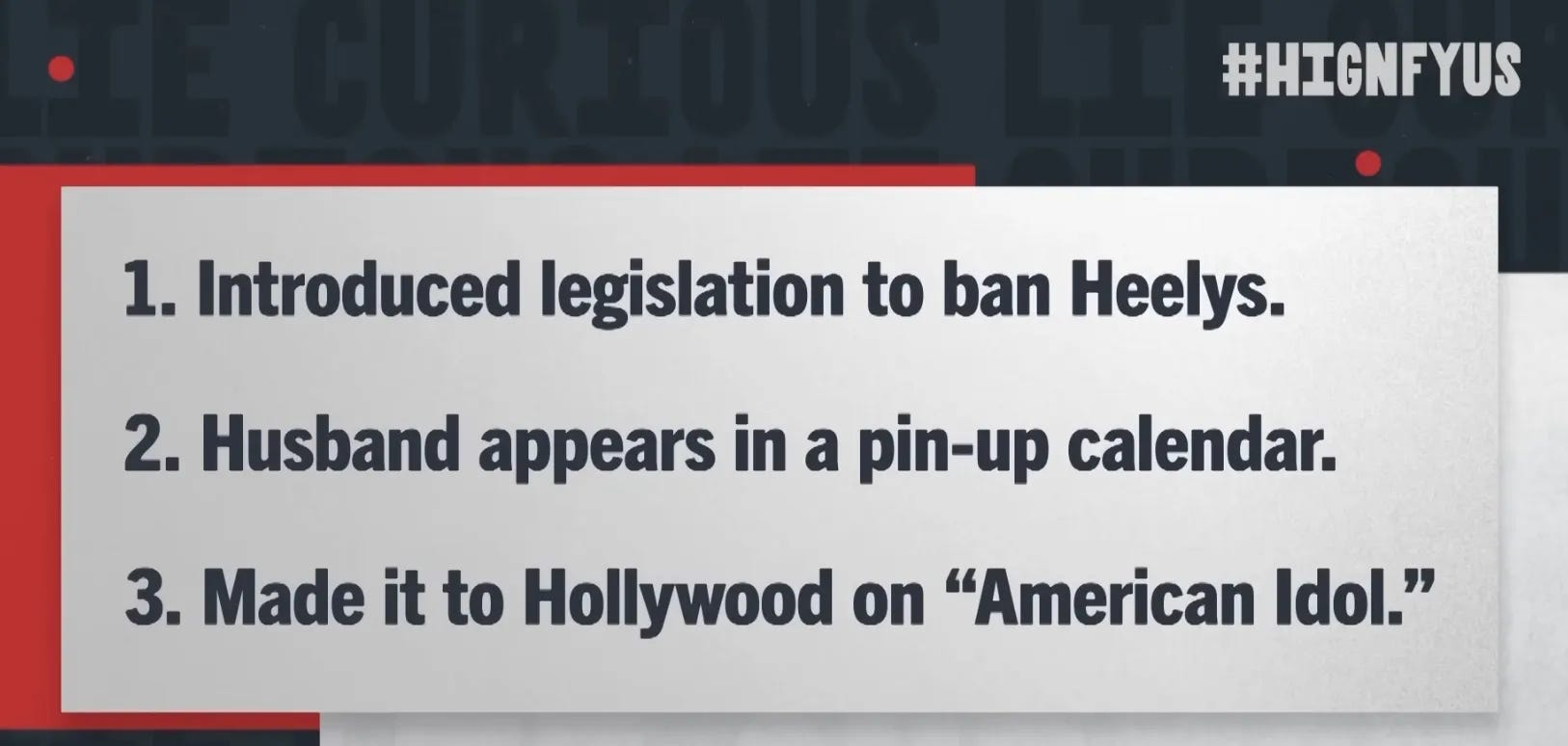
So, which one is a true fact about your next congresswoman?
We’ll let you play along — the answer’s tucked neatly in the footnote.3
This isn’t comprehensive. Pima County has more than a dozen other elected officials who may have their own legislative goals. For example, County Attorney Laura Conover might lobby for something not on the county’s list.
Yes, Joe was briefly a constable roughly five years ago. Ask him about reforming the office during his next AMA.
Grijalva’s husband, Sol Gómez, appeared in the Men of the Stacks 2012 pin-up calendar. The Tucson Weekly has a good write-up from back then about his brief appearance as a model librarian.
I know it’s not the most prominent story policy-wise in this fantastic summary, but I foresee council lobbying to make the streetcar a tiered fare service. Using RTA tax revenues to potentially foot the bill for free bus fares and/or transit updates is one thing, but paid parking, even if it’s only $1 or so, to cover streetcar operations is a pocketbook concern of sorts that will feel more like a tax to the everyday person.