

Getting caught up
A $3.8 million lawsuit … The de-Flocking continues … And Tucson needs more (political) influencers.
Welcome back, readers!
Now that we’ve all pushed back from the Thanksgiving dinner table, it’s time to get caught up on the news.
We’ve got you covered with last week’s Top 5 storylines, from local political spats to long-running failures at the state land agency.
Click this button and you won’t have to worry about reading the news when you’re hanging with your family over Christmas.
1. Raising a stink at the RTA
The long battle over who is in charge of the biggest transportation organization in Pima County might not be over.
Six months after Farhad Moghimi was fired as head of the Pima Association of Governments and the Regional Transportation Authority, he filed a notice saying he is planning to sue the officials who fired him for $3.8 million, the Republic’s Sarah Lapidus reports.
He singled out what he called “malicious and intentional” conduct by Tucson Mayor Regina Romero and Pima County Supervisor Matt Heinz. For example, Moghimi says Romero retaliated against him after he pointed out a conflict of interest in her son participating in a youth art program that was paid for by state transportation funds.
But as far as Tucson Sentinel columnist Blake Morlock is concerned, “he was fired because he couldn’t count to five.” Simply put, Moghimi lost the support of the people who employed him.
“Any CEO, executive director, city manager, school superintendent or university president must maintain a majority support among the body they work for, or grab a box and start packing,” Morlock writes.

2. De-frocking Flock cameras
The University of Arizona is redefining its relationship with Flock Safety and its network of automated license plate readers on campus, Arizona Public Media’s Danyelle Khmara reports.
The decision came after growing community concerns that the data gathered by Flock cameras would be used to crack down on protesters or aid President Donald Trump’s mass deportation program.
On paper, the cameras were set up to help campus police find stolen cars and people who were reported missing. But they were also part of a national network that allowed multiple federal agencies to access the data.
Under the new deal, UA officials will share data with law enforcement agencies in Arizona, but the feds will have to get approval from the UA on a case-by-case basis.
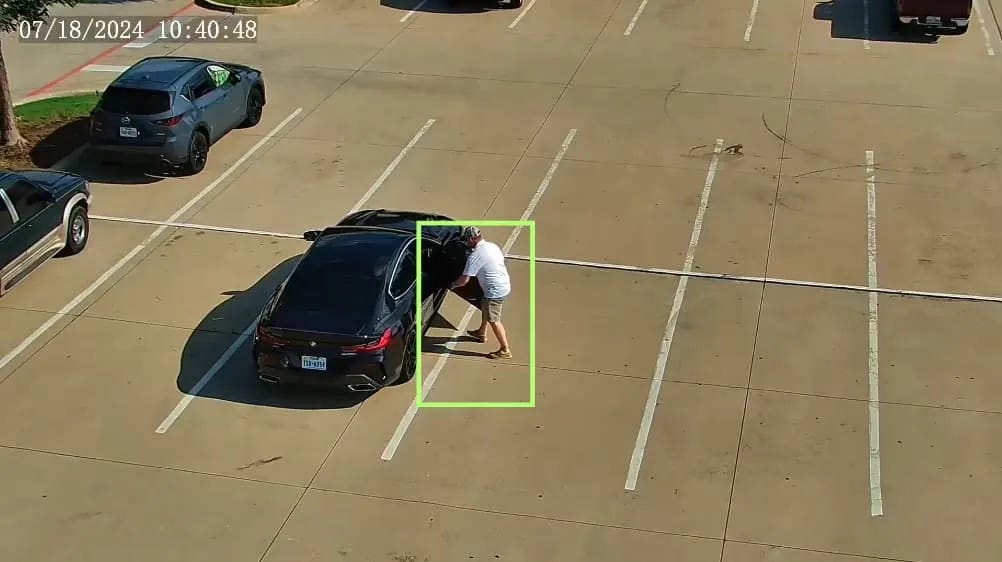
In South Tucson, officials will continue to the use the Flock cameras, reversing a decision earlier this month to get rid of the license plate readers, Khmara reports. Residents asked the South Tucson City Council to keep them for safety reasons.
“We’ve also recovered four stolen vehicles and made four arrests with those stolen vehicles. That is four citizens in the city that have gotten their vehicles back,” South Tucson Police Commander Raul Navarro told the council.
3. A bit of border drama
If the U.S. is going to blow up supposed drug traffickers in the Caribbean, why isn’t the U.S. military doing it to traffickers at Arizona’s border with Mexico? That’s the question posed by Arizona Daily Star columnist Tim Steller. He’s not advocating for drone strikes at the border, of course. He’s just pointing out the hypocrisy of U.S. policy right now.
Farmers and truckers in Mexico blocked the highway that leads to the commercial port of entry in Nogales, where streams of tractor-trailers cross the border every day. They wanted access to a lending bank, protections for the domestic market for basic grains and better safety for truckers, among other demands, the Nogales International’s Daisy Zavala Magaña reports.
By Friday, the farmers had struck a deal with federal officials in Mexico, including an agreement to discuss protecting roads that are plagued by cartel violence, per KJZZ’s Nina Kravinsky.
A Tucsonan is testing the asylum system in Canada, LOOKOUT’s Ellie Samsal reports.
Hannah Kreager, a 22-year-old transgender woman, is trying to convince Canadian officials she has a legitimate fear of persecution in the United States, particularly under the Trump administration.
Kreager decided to head to Canada in April after rumors spread that Trump would declare martial law on April 20.
“After seeing those rumors, she said her father told her, ‘I’m getting you out of here by the 20th,’” Samsal reported.

4. Fine print fiascos
If you’re not a fan of the Copper World mine, then the state Auditor General’s Office has some “good” news for you, or at least for your arguments.
Arizona’s State Land Department failed to do long-range planning for 50,000 acres it has sold in the last decade, the Star’s Tony Davis reports.
An audit of the program found officials failed to follow procedures designed to prioritize the sale of state-owned lands that bring in the most revenue.
The vast majority of that money is destined to help out K-12 public schools.
But the state land department doesn’t have policies in place, the audit found, to initiate auctions based on the “highest and best use” of the land versus requests from the private sector to put the land up for sale.
Roughly 70% of 91 land auctions over an eight-year period only had one bidder, auditors found.
Save the Scenic Santa Ritas is arguing that the audit’s findings show the proposed sale of 160 acres for the Copper World project shouldn’t move forward without a long-range plan for using state lands, Davis reports.
The federal spending bill is making it harder for local refugees to access basic parts of the social safety net, like Medicaid or SNAP, Pima County Supervisor Matt Heinz says.
He’s pushing for the county to provide $750,000 to help refugees, the Tucson Sentinel’s Paul Ingram reports. The money would come from the county’s general fund and go to the International Rescue Committee, Lutheran Social Services of the Southwest and Catholic Community Services.
That federal spending bill also is putting roughly 124,000 Arizonans at risk of losing SNAP benefits due to new work requirements, per Nick Karmia at Cronkite News.
That’s because the bill got rid of numerous exemptions to work requirements, including for unhoused people, veterans and young people who were in foster care until they turned 18 years old.
5. Turning the jail into a psychiatric ward
The Restoration to Competency program, run through the Pima County Jail, is meant to be an alternative for those serious mental health issues, but it’s become the region’s default psychiatric ward, writes Arizona Luminaria’s John Washington.
Taking those who cannot stand trial out of the criminal justice system is designed to clear court backlogs and reduce the jail population, but serious issues like forcibly medicating people have led to dangerous conditions inside the jail.
For example, a man being held in the jail as part of the RTC program was tazed and punched repeatedly in 2024 by correctional officers after refusing to take his meds, leaving him bloodied and bruised.
And while Pima County Sheriff Chris Nanos believes many of these people belong in a hospital or other medical facility, about 65 percent of the people in the RTC program are housed in the jail.
Complaints tied to the RTC program include individuals being placed on involuntary holds that can be longer than the typical sentence for the crime they’re accused of committing.
About 1,400 people have been placed in the RTC program in the last few years.
“There’s a lot of people in my jail who are sick,” Nanos said. “If you’re a sick person, suffer from substance abuse or mental illness, you belong in a hospital. We have a lot of people there who are just sick, and they shouldn’t be there.”

The Arizona Capitol Times put out its inaugural “Arizona’s Power 50” list last week and Tucson rates about as high as two dead people and President Donald Trump.
He is #3 on the list, btw, just after Gov. Katie Hobbs and Attorney General Kris Mayes.
U.S. Sen. Mark Kelly (#10), Mayor Regina Romero (#22) and Arizona Corporation Commissioner Lea Márquez Peterson (#27) were the Tucsonans who made the list.
Tim Stellar is the best. Why has no one noticed that the boats these “edged drug traffickers” are using couldn’t get up Lake Powell and none the less to the US from Venezuela. It’s 2000 miles by sea. Plus, with gas and any drugs they can’t be going that fast. You could easily stop these guys and search these boats. It’s almost laughable if not so tragic. I’m hardly an expert on international law but this looks bad.